The ROI of Fleet Camera Systems
The ROI of Fleet Camera Systems for Safer Fleets
For transport operators, a single incident can cost far more than vehicle repairs. Effective fleet incident management helps contain those risks.
An insurance dispute, disputed claim, delayed investigation, lost delivery opportunity, and vehicle idle time all create significant additional direct and indirect costs, potentially running into the thousands.
As insurance costs continue to rise, the challenge of finding drivers, increased compliance requirements, and the need to manage risk on an ongoing basis, transport operators are facing new challenges in managing risk on a day-to-day basis.
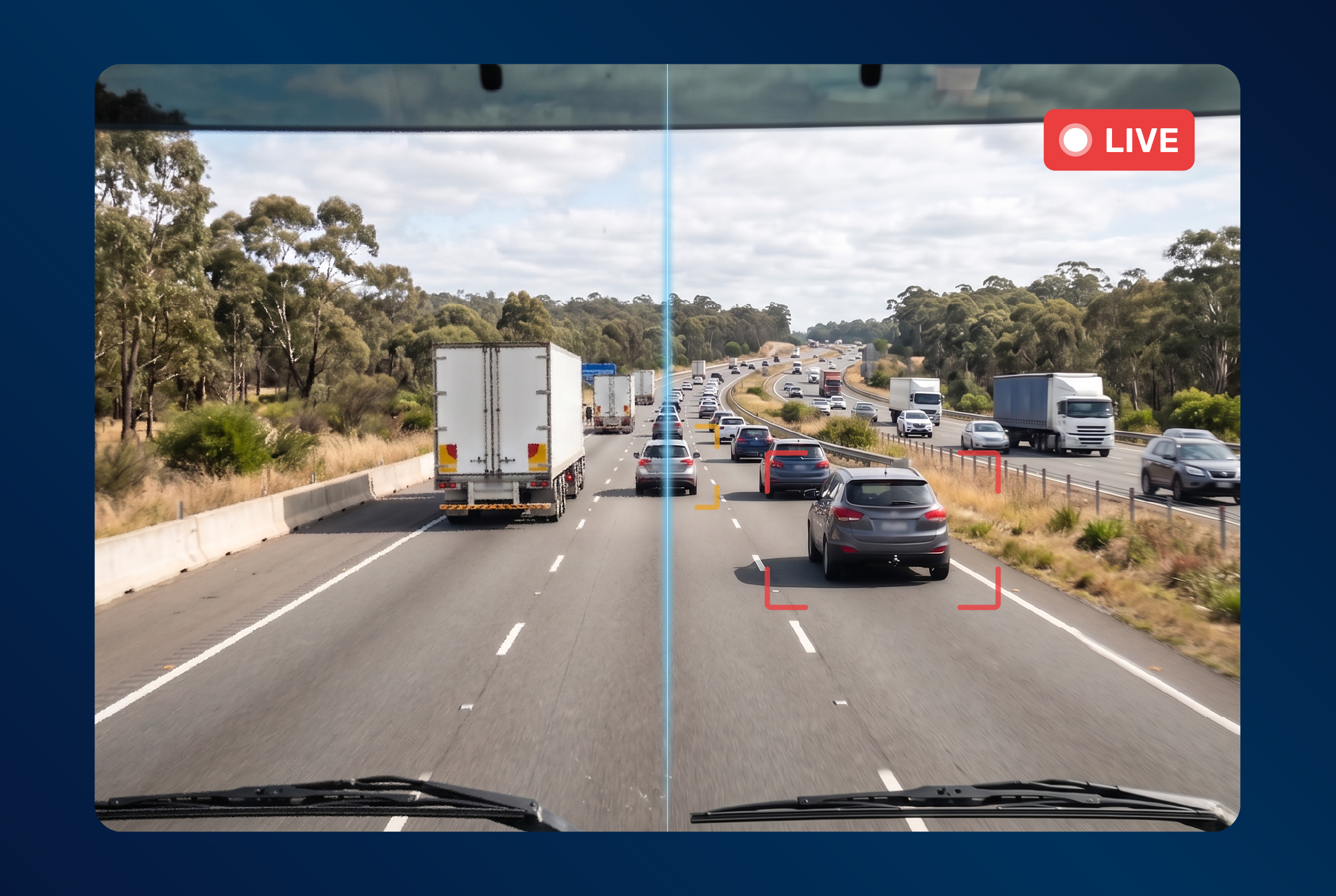
The benefit that modern video telematics platforms, or fleet camera systems, bring to transport operators is the ability to reduce claims costs, improve safety, resolve incidents quickly to minimize downtime, and provide fleet operations with insights to manage their fleet better.
As with all technologies, the transport operator needs to work out the benefit of installing cameras against not installing cameras and allowing their fleet to continue to operate as before.
What Does the Return on Investment Look Like for Fleet Camera Systems
While it is great to have recorded evidence from fleet camera technology, the return on investment from this technology comes from a number of operational improvements throughout a business.
This can include:
- Reducing insurance disputes
- Investigating incidents quickly
- Reducing the cost of vehicle downtime
- Improving the way that drivers behave on the road
- Better visibility of your fleet
- Reducing administration time
- Faster claims processing
- Improved compliance
- Reduced risk of vehicle damage
- Better management of incidents and accidents
In contrast to the old standalone dash cams, connected video telematics systems allow real-time access to video, along with telematics data and a central hub to manage and monitor all incidents for a fleet.
For a growing fleet, this level of operational visibility is able to highlight the many cost savings available on an ongoing basis.
How Fleet Management Cameras Reduce Insurance Claims & Investigation Costs
One of the fastest ways to gain return on investment (ROI) from your fleet is by enabling reliable video evidence at the time and place of an incident, combined with efficient fleet incident management.
By not having footage of an incident, fleet operators are forced to rely on:
- The statement of the driver who was involved in the incident
- Third-party accounts of the incident
- Delayed police reports of the incident
- Manual reconstruction of what happened in the incident
The above can cause huge delays in claims processing for weeks and even months.
Connected fleet camera systems can enable fleet operators to:
- Retrieve footage of incidents remotely
- Clarify incidents quickly to prevent misunderstandings
- Save time in investigating incidents to get to the bottom of things
- Provide evidence to support insurance claims
- Resolve disputes quickly to avoid huge losses
- Protect drivers from false accusations
- Standardised incident management of their fleet
Example: Disputed Intersection Collision
A transport operator based in regional NSW had a multi-vehicle accident at an intersection involving one of their prime movers.
Without any evidence from cameras, it was likely that the operator would have been found liable for the accident.
However, forward-facing cameras provided strong evidence of another vehicle running a red light prior to the accident. The transport operator was able to:
- Immediately provide evidence of another party’s fault for the incident
- Avoid delays in investigating the incident to find out who was at fault
- Minimise exposure to liability for the accident
- Return the vehicle to operation quickly through the operator’s fleet incident management process
Often, the prevention of a single claim can provide substantial financial benefit.
Read more on How Fleet Cameras Reduce Truck Accidents and Improve Driver Safety.
Reduced Downtime Means Higher Fleet Productivity
Downtime is one of the biggest hidden costs in transport operations.
When vehicles are off the road waiting for inspections, investigations, or incident reviews, businesses can experience:
- Missed delivery windows
- Lost revenue
- Driver scheduling disruptions
- Reduced asset utilisation
- Customer service impacts
Connected fleet camera systems help reduce downtime by giving operators faster access to operational data and incident footage, and by aligning fleet incident management with maintenance and scheduling.
For regional or remote fleets, this becomes even more valuable because footage can be reviewed remotely without waiting for vehicles to return to the depot.
Example: Remote Incident Review
A bulk haulage operator running long regional routes experienced a roadside incident involving trailer damage hundreds of kilometres from base.
Instead of waiting for the truck to return:
- Operations staff accessed footage remotely
- The cause of the incident was confirmed quickly
- Maintenance planning began immediately
- Driver scheduling was adjusted the same day
The result:
- Faster operational decisions
- Reduced idle time
- Minimal disruption to deliveries
Example: Why Downtime Hits Owner Operators Harder
For owner operators, downtime can have an even bigger financial impact.
Unlike larger fleets with spare vehicles available, many owner drivers rely entirely on a single truck to generate income. If that vehicle is taken off the road after an incident, the consequences can be immediate.
A minor collision, disputed insurance claim, or delayed investigation can mean:
- Lost daily income
- Missed customer work
- Delayed repayments or operating costs
- Ongoing hire or finance commitments without revenue coming in
- Difficulty securing replacement transport
In one hypothetical scenario, an owner operator involved in a low-speed roadside incident was able to provide video footage to their insurer within hours using a connected camera system.
Because the footage clearly showed the events leading up to the incident:
- Liability questions were resolved faster
- The claims process moved more quickly
- Repairs were approved sooner
- The truck returned to operation earlier than expected
For single-truck operators, reducing even a few days of downtime can make a significant difference to cash flow and business continuity.
That's why connected camera systems are increasingly being viewed not only as safety tools, but as business protection tools for independent operators.
Better Visibility Creates Smarter Fleet Management
As your fleet grows, it can become increasingly difficult to manage visibility of your fleet on the move.
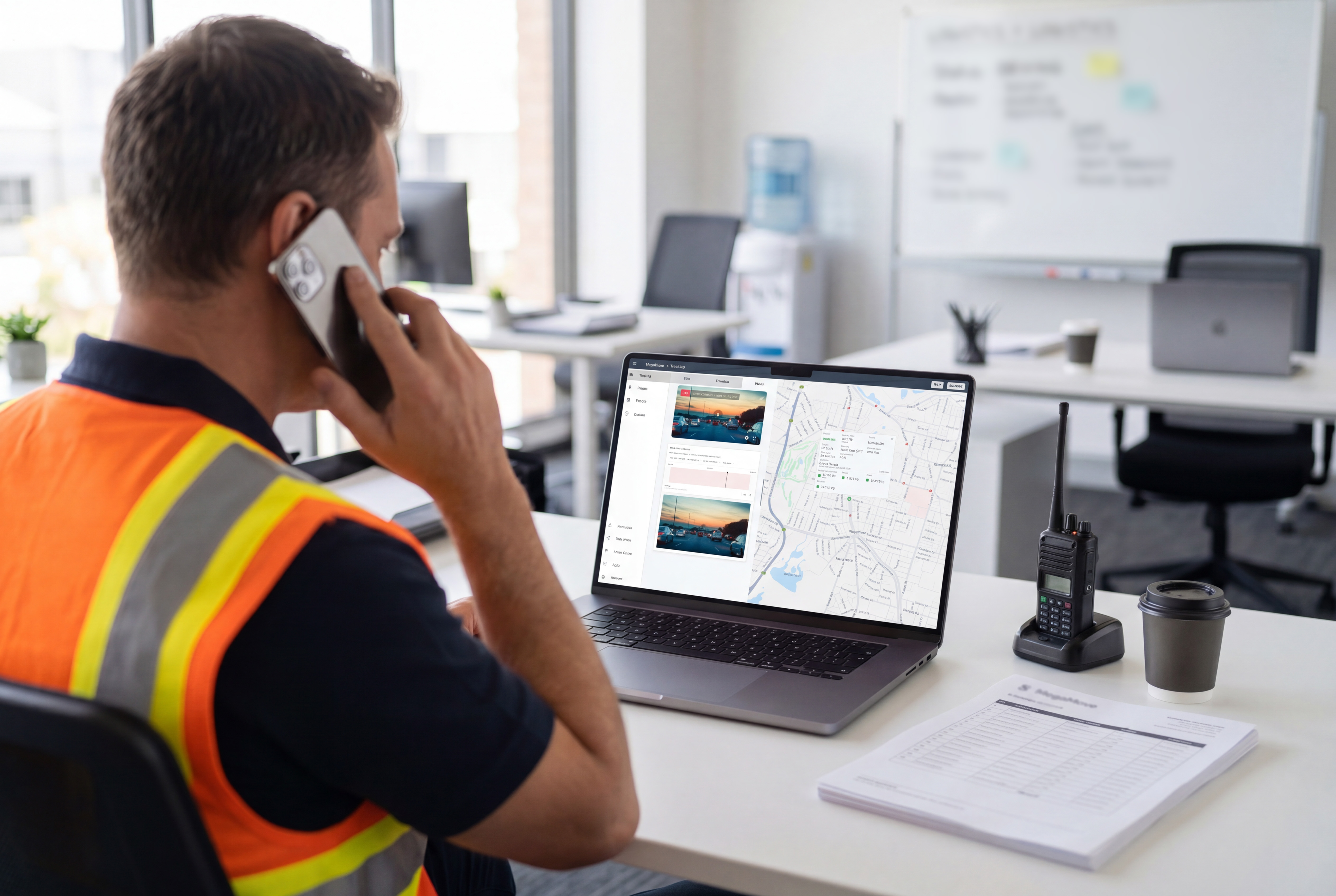
By integrating your fleet camera system with your telematics platform, you can gain real-time visibility of your fleet. This, along with safety reporting, vehicle activity, route and trip information, and driver behaviour, can allow your operations team to see what is happening and respond in real time to improve safety and coordinate activities across business functions.
Step-by-Step: Using Video Data to Improve Fleet Operations
Identify recurring incident patterns
Review footage from your fleet camera system and use telematics data to identify incident patterns. Typical safety incidents include events such as:
- Harsh braking
- Fatigue events as reported by driver fatigue monitoring systems
- Following distance issues
- Depot damage
- Reversing incidents
Prioritise high-risk routes or drivers
By using your safety event reporting system, identify the highest-risk routes or drivers and provide targeted driver coaching.
Implement targeted driver coaching
Using video evidence from your fleet camera system, provide driver coaching to improve awareness of safety incidents and improve driving behaviour. Also use driver fatigue monitoring systems to improve fatigue awareness.
Reduce manual reporting of incidents
Incidents can be reported through a centralised fleet incident management system to eliminate paperwork and enable prompt communication with drivers and operations teams, as well as management.
Measure the improvements to your operations
Use the safety data to measure the following:
- Number of safety incidents
- Claims made by fleet drivers
- Hours of downtime per year for fleet vehicles
- Vehicle utilisation by fleet vehicles
- Driver performance metrics and trends
The most successful fleets use their camera systems as operational intelligence tools to improve safety and operations.
Supporting Drivers Improves Long-Term Safety Outcomes
There's a misconception that fleet cameras exist to "watch drivers."
In reality, modern systems are increasingly designed to support drivers and reduce risk exposure.
AI-powered safety features can include:
- Fatigue awareness alerts from driver fatigue monitoring systems
- Lane departure warnings
- Following distance monitoring
- Driver distraction alerts
- Speed awareness notifications
These tools provide an extra layer of situational awareness during long shifts and difficult driving conditions.
Example: Preventing Fatigue-Related Incidents
A long-haul operator introduced driver fatigue monitoring systems across part of its fleet after experiencing several near-miss events during overnight routes.
Within months:
- Fatigue alerts increased driver awareness
- Near-miss reports decreased
- Coaching conversations became more data-driven
- Drivers reported feeling more supported on long routes
Safety improvements don't always appear immediately on a balance sheet, but reduced incidents, fewer disruptions, and stronger driver retention can deliver substantial long-term value.
Old Fleet Camera Systems vs Modern Connected Video Platforms
The shift toward connected platforms is changing how transport operators manage safety, operations, and risk across the fleet. These platforms also centralise fleet incident management to shorten response times and improve collaboration.
Why ROI Increases as Fleets Grow
Larger fleets often experience stronger returns because operational complexity increases rapidly with scale.
As fleets expand, businesses need:
- Standardised fleet incident management and reporting
- Centralised safety visibility
- Consistent driver support
- Remote vehicle oversight
- Faster communication between teams
Without connected systems, manual processes become harder to manage and operational blind spots increase.
For many growing transport businesses, fleet camera systems become critical infrastructure for maintaining operational control.
How to Calculate Fleet Camera ROI
The most effective ROI evaluations look beyond hardware costs alone.
Direct ROI Factors
These are the easiest savings to measure:
- Reduced insurance costs
- Faster claims resolution
- Reduced downtime
- Lower admin burden through fleet incident management workflows
- Reduced vehicle damage exposure
- Improved asset utilisation
Indirect ROI Factors
These gains build over time:
- Stronger safety culture
- Improved operational efficiency
- Better driver retention
- Improved compliance visibility
- Reduced operational disruption
- Better customer service consistency
A fleet camera system should ultimately be evaluated based on how it improves operational performance across the business, not simply the cost of the device itself.
Fleet camera systems are no longer just about recording incidents.
For transport operators, connected video telematics platforms are becoming essential tools for reducing claims exposure, improving safety visibility, minimising downtime, and strengthening operational performance across the fleet through better fleet incident management.
The operators seeing the strongest returns are those using video technology proactively, not simply as evidence after something goes wrong.
Video and Safety solutions from V-DAQ help transport businesses combine remotely accessible video footage, telematics integration, and centralised fleet incident management into a scalable solution designed for heavy vehicle operations.
Frequently Asked Questions
The ROI of fleet camera systems comes from the operational improvements across the organization. A modern connected video telematics solution provides users with real-time video footage as well as the telematics data of their vehicles.
Centralised incident management for all fleet vehicles creates a lot of value as well. Typical changes include a reduced number of insurance disputes, less time to complete investigations, less downtime, more responsible driver behaviour, better fleet control, less administration time to handle incidents, faster claims handling, better compliance monitoring, and better-controlled incident management across the fleet.
Growing fleets experience the cost savings from the extra visibility created for management very quickly.
Video evidence from connected fleet vehicle cameras creates reliable evidence. Footage is used instead of driver statements, third-party statements, or delayed reports. Operators of a fleet management system can retrieve the video from the cloud at any time. This creates a very fast claims process, and investigations are completed quickly to avoid disputes. It also reduces the chance of a driver being wrongly accused and lowers risk to the organization in case of legal actions.
For example, a collision at an intersection where one of the vehicles involved drove through a red light: the forward-facing camera of the other vehicle provided clear video evidence of the cause of the incident. This evidence was submitted immediately, creating much less delay than normal to process the claim and return the vehicle to operation.
Teams using a fleet management solution can verify the cause of an incident and plan and execute maintenance or repairs from remote locations. This is extremely important for regional or remote operations, where time lost waiting for a vehicle to return to base can be reduced significantly.
The extra time can be used to plan and execute maintenance or repairs. This creates less time lost (downtime) and less impact on delivery schedules for fleet vehicles. This is very important for owner-operators as well. A few fewer days of lost time than normal can create a lot of extra revenue.
The evidence created by the cameras of a fleet management solution can also be submitted to insurance companies immediately to process claims as fast as possible. This creates a business protection solution as well as a safety solution.
Video data from fleet vehicle cameras, as well as telematics data from these vehicles, is used as operational intelligence to create improvements for safety and operations. Typical patterns to improve include harsh braking, fatigue, following distance, reversing, and depot damage.
Safety events created by video and telematics data are used to prioritise routes and drivers for improvement. Targeted and constructive driver coaching is created to improve performance.
Fatigue monitoring, as well as other factors that create safety events, are monitored to improve. Manual incident reporting is reduced through central incident management created by a fleet management solution.
All incidents are reported, managed, and analysed from a central location. This creates a big change in the number of safety events and incidents, and in the trend of key performance indicators used to measure safety and operational improvements.
Typical KPIs are the frequency of safety and non-safety events, claims costs, downtime, utilisation, and driver performance. These KPIs are measured and analysed regularly to create improvements by using video and telematics data in a positive way.
Most people calculate ROI based on the price of the hardware as well as operational improvements. Direct benefits are reduced insurance costs, faster claims processing, less time lost due to downtime, reduced administration time through automation of workflows, reduced vehicle damage, and better utilisation of fleet assets. Indirect benefits include an improved safety culture, more efficient operations, better driver retention, better compliance monitoring, fewer disruptions for customers, and more consistent services provided to customers.
- Metrics to track and confirm ROI are claims frequency and costs, claim cycle time, number of downtime hours per period, average and maximum vehicle utilisation, number and trend of safety and non-safety events, driver performance measured by safety and non-safety events as well as telematics and video, and administration time to process incidents.
- Many fleets see the return on their investment in a fleet management solution within a short period of time. Even a single incident that is processed faster than normal can create enough return on investment by itself to cover a big part of the investment created by the camera solution of a fleet management system.
Ready to Improve Fleet Visibility and Reduce Operational Risk?
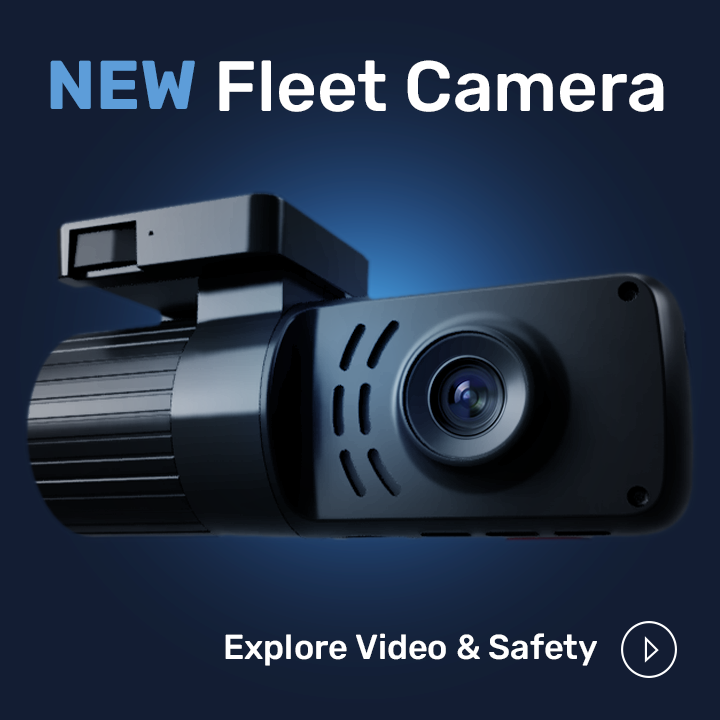
Discover how V-DAQ’s Fleet Camera helps transport operators improve incident response, increase fleet visibility, and support smarter operational decision-making.