Smart On-Board Mass Explained
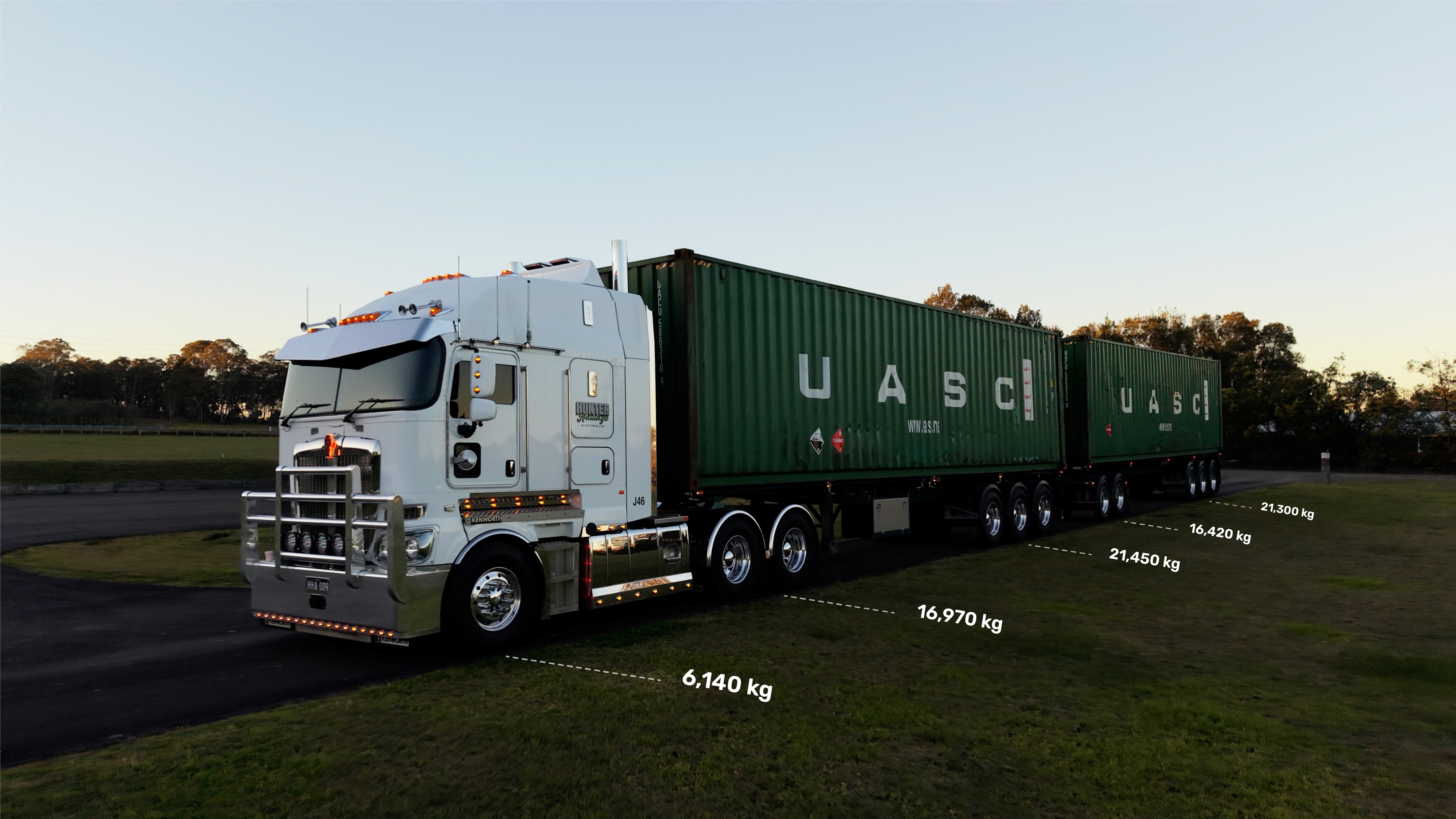
For heavy vehicle operators, vehicle mass has a direct impact on day-to-day productivity. Load too much and you increase compliance risk. Load too little and you may be leaving valuable payload capacity unused. Having accurate mass information helps operators find the balance, make better loading decisions and get more from their fleet.
Smart On-Board Mass (Smart OBM) connects vehicle mass data with the regulatory framework required for certain road access requirements. As an extension to the Telematics Monitoring Application (TMA), Smart OBM, when paired with an approved on-board weighing system, automatically captures vehicle mass data and securely reports it through the National Telematics Framework (NTF).
For operators, this helps simplify mass reporting, reduce manual processes and meet compliance while accessing the productivity benefits available on approved networks.
V-DAQ takes that a step further by making mass data useful in day-to-day operations.
Load with real-time mass visibility
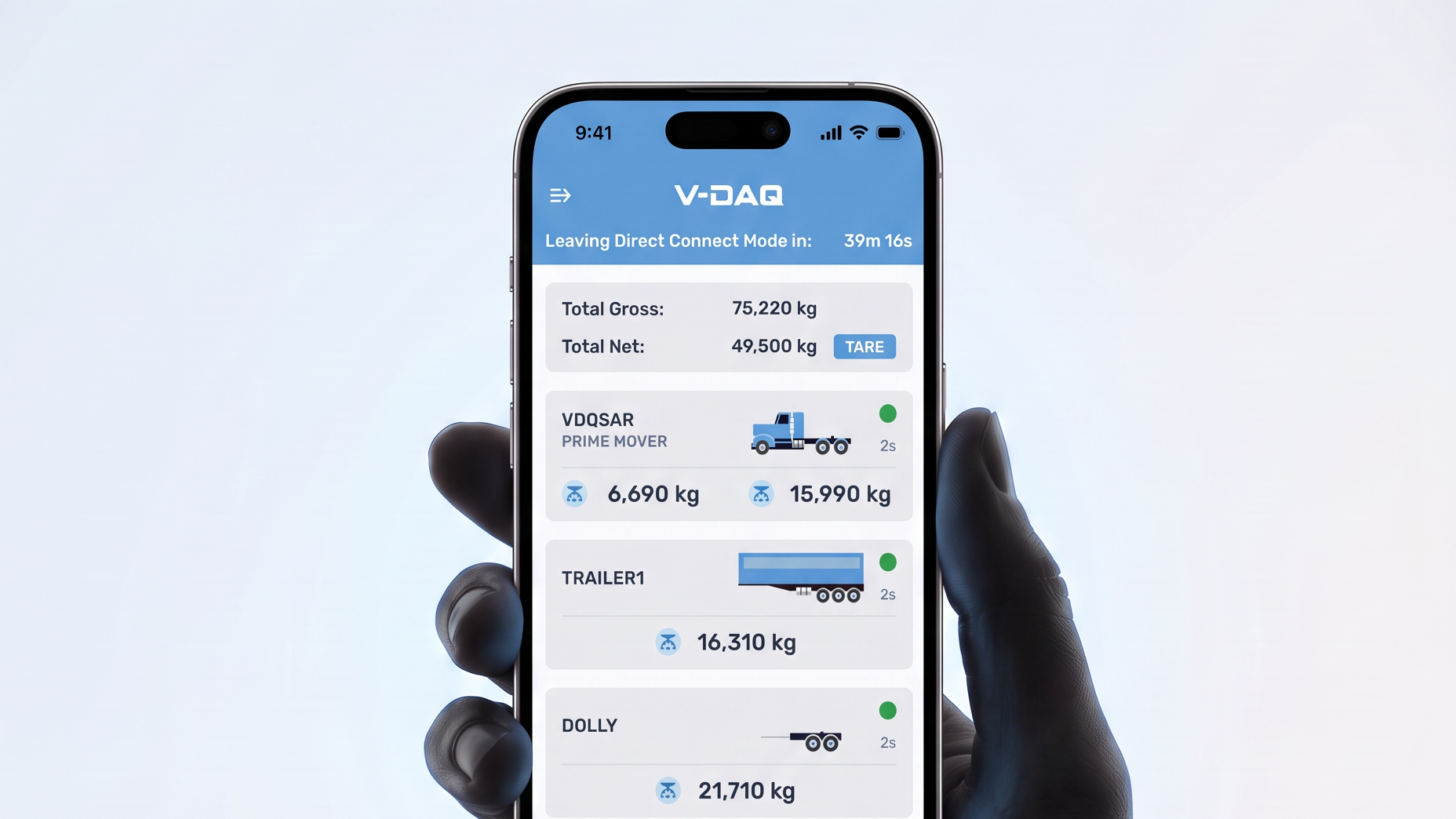
One of the biggest advantages of Smart OBM with V-DAQ is being able to use vehicle mass information while loading decisions are still being made.
Drivers can see vehicle mass in and around the cab, while operations teams can access the information from the office. This allows drivers to make adjustments before leaving site, reducing the risk of overloading or leaving available payload capacity unused.
For operators, that means more accurate loading, fewer unnecessary trips and better use of available payload. Across a fleet, those decisions can improve productivity and cost control while reducing unnecessary kilometres.
Access higher-productivity vehicles and networks
Higher Productivity Freight Vehicles (HPFV) require Smart OBM to access certain networks and productivity benefits.
Depending on the applicable access arrangements, this can include PBS A-Doubles, PBS B-Triples, PBS semi-trailers, vehicles operating under hill descent monitoring arrangements, and other approved high-productivity vehicle combinations and networks.
For transport operators, this can mean moving more freight per trip and making better use of approved high-productivity networks.
The value isn’t simply carrying more weight. Greater network access can improve fleet productivity and, depending on the access requirement, reduce the need to manage individual permits.
Take the paperwork out of compliance
Compliance shouldn’t require drivers and operations teams to spend their day chasing paperwork.
Smart OBM with V-DAQ makes the administrative side of operating under TMA simpler. Operators can manage digital enrolment and activation, access current certificates and compliance information, and maintain secure digital records without relying on paper-based processes.
V-DAQ gives operators one place to view enrolments, certificates and compliance information for their vehicles.
Get vehicles connected sooner
Adding technology to a fleet can create downtime if installation and onboarding become complicated.
V-DAQ's TCA-approved telematics device can be self-installed, with paperless onboarding and digital activation helping operators get vehicles connected sooner.
As operational requirements change, scheme changes are also free, making it easier to adapt without adding more administration each time a vehicle's operating requirements change.
The result is less time spent on administration and more time moving freight.
One platform. Total fleet visibility
Vehicle mass data is more valuable when it can be viewed alongside the rest of your fleet information.
Through the V-DAQ Platform, operators can view vehicle mass alongside fleet telematics, scheme enrolments, compliance information, digital records and certificates, giving drivers, compliance teams and fleet managers a more complete view of their operations in one place.
For operators who want to use this data beyond the V-DAQ Platform, mass data is also available through the V-DAQ API, allowing it to connect with their own business systems.
Frequently Asked Questions
Smart OBM is an extension to the Telematics Monitoring Application (TMA). When paired with an approved on-board weighing system, it automatically captures vehicle mass data and securely reports it through the National Telematics Framework (NTF)
An on-board weighing system measures vehicle mass. Smart OBM enables approved mass data to be captured and reported through the NTF for applicable regulatory and road access requirements. With V-DAQ, operators can also access mass information through supported V-DAQ applications and the V-DAQ Platform.
Knowing vehicle mass during loading can help operators make better use of available payload and reduce the risk of overloading or underloading. More accurate loading can mean fewer unnecessary trips, better use of vehicle capacity and improved fleet productivity.
V-DAQ works with approved on-board mass systems. Contact V-DAQ to confirm compatibility with your existing OBM system and vehicle configuration.
Contact V-DAQ and our team will conduct a needs analysis to understand your fleet, existing on-board mass systems, vehicle combinations and road access requirements. From there, we can identify the right Smart OBM setup for your operation and what’s required to get your vehicles connected and compliant.
Load smarter with V-DAQ Smart OBM
Smart OBM with V-DAQ gives operators the mass visibility they need to make informed loading decisions while meeting their reporting obligations.
By bringing vehicle mass, telematics and compliance information into one platform, operators can maximise payload, reduce unnecessary trips and improve productivity across their fleet.